Friday, April 19th, 2024. |
|
|
|
Hi there,
Welcome back to another edition of WT Weekly, your favourite spot for the most relevant bits shaping African tech. Let's dive right in!
In the bustling world of African tech entrepreneurship, few stories resonate as deeply as that of Sim Shagaya, one of the pioneers behind Nigeria's e-commerce revolution.
In 2011, with just four million smartphone users in Nigeria, Sim Shagaya saw potential where others saw barriers. Armed with a vision and fueled by determination, he launched an e-commerce startup that would attempt to shakeup the landscape.
And, as it turns out, building Konga would prove a rollercoaster, up to the day he moved on; the startup would eventually offloaded in a firesale.
The Konga files & the failed merger with Jumia
Shagaya reflects on Konga’s early strategy, acknowledging a focus on heavy spending to grow market share as it competed with Jumia.
He admits to a mistaken belief that acquiring customers at all costs was the only way, but now sees the value in a slower, more sustainable approach prioritising gross margins and customer experience.
“I look back now and I think I could have built this very differently. I think it’s entirely possible to build in the short term, a smaller, slower-growing business that has its eye on gross margins and provides a great customer experience,” the ex-Konga boss says.
Plenty to unpack
Shagaya recently opened up on the high and lows of building Konga in an interview with our friends at TechPoint Africa, including regrets, lessons, and candid bits about a proposed merger with fierce rival Jumia that tanked in the early days because, in a manner of speaking, the vibes were off.
As his story reminds us, the path to success is never smooth. Economic turmoil and fierce competition tested his resolve, yet his enduring spirit propelled him forward.
Now, with uLesson, Miva Open University and The Honey Badger Fund, Shagaya continues to inspire a new generation of African entrepreneurs. 🌍
Read more: The Konga-Jumia Merger That Never Happened & Sim Shagaya’s Verdict
|

|
WeeTracker Media and AFEX have partnered to launch a series of Masterclass sessions for African companies.
The Masterclass sessions aim to provide startups and other players in the ecosystem with a platform to learn from experienced founders, investors, and tech builders.The first physical session of the Masterclass series will take place in Nairobi on 26th April (2 pm to 5:30 pm). Please note that participation will be on a first-come, first-served basis, and only 30 seats are available for early-stage startups (MVP to Pre-Series A). There is no participation fee for startups.ONLY FEW SEATS LEFT!
|
|
Has WeBuyCars unlocked the fast lane?
|
🌍In South Africa, the tech scene is buzzing with excitement as WeBuyCars makes waves with its record-breaking IPO. 🎉
Last week, South Africa witnessed its biggest IPO in three years, as WeBuyCars roared onto the scene with a $444 million debut.
The company's success underscores the growing potential of African tech startups to make their mark on the global stage. 🌐
As the first of many local tech IPOs potentially on the cards, WeBuyCars' milestone signals a new era of opportunity for African entrepreneurs.
With local exchanges gaining momentum and VC funding slowing down, could we be witnessing the resurgence of homegrown IPOs in the African tech landscape? 📈 Feel free to share your views.
Know more: South Africa’s WeBuyCars Lists on JSE
From visionaries like Sim Shagaya to trailblazing startups like WeBuyCars, the future of African tech is brighter than ever.
Stay tuned as we continue to unpack the latest trends and stories shaping the industry. 💡
|

|
🚨Scoop: Moniepoint is on the move. Moniepoint Inc., the parent company of one of the largest business payments and banking platforms in Nigeria, is stepping up its global ambitions with the ongoing ramp-up of operational capacity in its UK entity, WT has learned.🌐 They're expanding their global footprint 🌍 with the launch of Moniepoint UK and actively seeking talent for key roles! 💼 This strategic move, alongside previous indications of a foray into North Africa and Kenya, highlights Moniepoint's ambition to impact financial services across Africa and beyond. 👨💼 Engagements with the UK financial regulatory authorities are afoot as relevant licenses are being sought, sources say 💰 Speculation on a focus on remittances 💸 and multi-currency wallets to capitalise on the growing demand for cross-border payments 🌐 💵 Diversifying into global markets would present a significant opportunity to shore up revenue; timely, too, as fluctuating foreign exchange rates are impacting the profitability of African startups.
|
|
This section is brought to you by AFEX
|
ACHIEVING SUCCESS AND SCALE - THE AFRICAN CONTEXT |
|
A lot of startup and business stories are quite similar. Ideally, someone discovers a problem out in the wild, within their own circles or even just through deep market or desk research.
They draw on personally held expertise or knowledge networks to cook up a solution and then they go to market.
Evidently, any mix of models and strategy will be tested out in a bid to deliver successful outcomes and it is even possible to pin-point some similarities across geographies and fields around how solutions/ products are developed and grown. One possible example is a dearth of heavily specialized products in Africa.
Scale and profitability are two heavily sought out outcomes in the startup ecosystem, and across most African economies they are increasingly difficult to hit in the face of unfavorable macros and a decidedly tough business environment.
It is in the face of this reality that startups working across many African markets do indeed have to build the plane as they are flying.
That is to say that most builders on the continent come to discover that important proponents of productivity and profitability for the majority of sectors are highly underdeveloped and necessarily need to also be built up.
A lot of builders therefore have to decide whether to ignore the faulty moving parts and continue a single focused approach at the risk of loss or to solve for their business while simultaneously fixing the broken parts of the value chain and, hopefully, increasing prospects of profitability.
In essence, to hit goals, many African startups need to do many things outside of their primary product development and distribution.
Fragmentation is a defining aspect of the business environment across many African markets making it vital to think about solutions end-to-end.
End-to-end solutions address complex business needs by integrating and solving simultaneously for many parts of the value chain that pertain to a business line. Here, the task is to connect previously scattered and siloed operations to effectively solve consumer needs.
For us, this has meant evolving a commodities exchange model from a pure fintech play to one that addresses many parts of the agriculture sector on the continent from extension and primary production to storage infrastructure and logistics.
Many innovative businesses on the continent have similarly expanded the scope of their solutions to fix vital levers for success.
This approach to building for the continent can give businesses some much needed control over several moving parts which keeps operations seamless and less prone to inefficiencies, but in certain cases, can slow growth in key product metrics and requires significantly more capital that can be harder to acquire from an investor class that is more familiar with streamlined operations.
It is important for builders and investors to understand that for African startups, fragmentation is the mother of all inventions hence achieving scale and profitability in Africa follows no particular template.
The continent is characterized by peculiarities that heavily impair straightforward playbooks. In line with this, capital providers often need to be as patient and resilient as builders, understanding that the ability to adapt and potentially expand the scope of solutions is a particularly valuable skill on the continent and both investors and builders have a role to play.
|
To know more about AFEX, click here.
|
|
|
|
‘Social Agriculture’ is gaining ground as Kenyan farmers embrace Facebook |
|
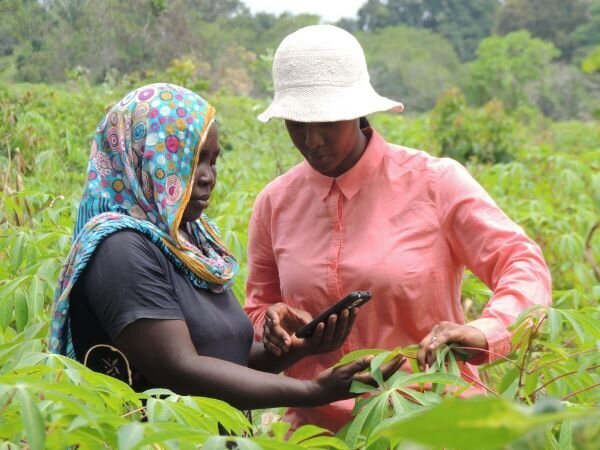
Kenya is proving a fertile ground for a growing trend researchers are calling “social agriculture” as new findings reveal the significant role of social media, particularly Facebook, in transforming the country’s agricultural landscape.
|
|
|
|
|
Delayed salaries and staff cuts at Tingo Group months after SEC fraud charges |
|
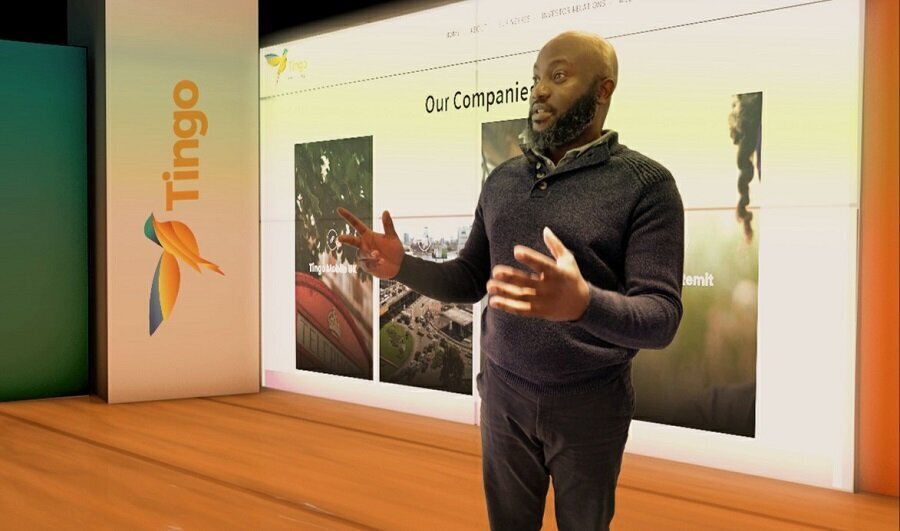
Tingo Group, an agri-fintech company sued by the SEC in December 2023 for fabricating its financial statements, furloughed nearly all its full-time employees in March 2024.
|
|
|
|
|
MarketForce is quitting B2B e-commerce & doubling down on social commerce |
|
The founder of the Y Combinator-backed Kenyan startup cited low margins and unit-level profitability challenges as reasons for sunsetting the B2B e-commerce operation.
|
|
|
|
|
Africa’s AI Policy Landscape Is Belatedly Shaping Up Amid Recent Uproar
|
|
African countries are looking to assert their imprint on the fast-developing artificial intelligence (AI) landscape as they grapple with the challenges of cultural representation and economic parity.
|
|
|
|
|
|